


Al-Issa’s visit highlights Australia’s multifaith future
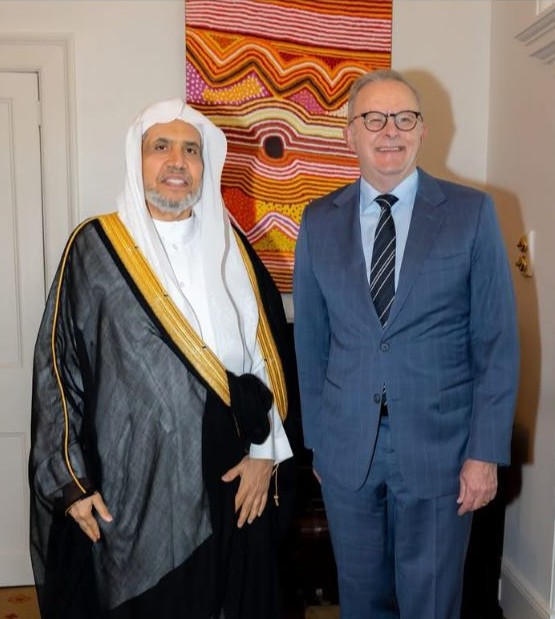
The meeting between Prime Minister Anthony Albanese and Dr Al-Issa reflects a wider recognition that effective diversity management relies on social trust as much as policy frameworks.
Khodr Saleh , SA Newes:
The recent visit of the Secretary-General of the Muslim World League, Dr Mohammad bin Abdulkarim Al-Issa, to Australia was not simply another diplomatic engagement. It was, in effect, a reminder that social cohesion in a society as diverse as Australia cannot rely on legislation alone. It requires sustained effort, credible partnerships, and a willingness to engage with institutions capable of influencing communities beyond the reach of government.
Prime Minister Anthony Albanese’s meeting with Dr Al-Issa signalled as much. His acknowledgement of the League’s work in promoting cross-cultural understanding reflects a broader shift: that managing diversity is no longer just a matter of policy design, but of social trust.
Australia’s demographic reality makes this unavoidable. More than 30 per cent of Australians were born overseas, and nearly half have at least one parent born abroad. Hundreds of languages are spoken across the country. Diversity is not an abstract concept it is the lived condition of Australian society.
“Social cohesion cannot be sustained by policy alone — it must be built through dialogue, trust and meaningful engagement.”
The challenge, then, is not whether diversity exists, but whether it is being effectively managed. In that context, Dr Al-Issa’s visit has been viewed as a timely and constructive opportunity. Not because it introduces a new model, but because it reinforces an existing one: that dialogue between cultures and faiths must be practical, continuous and embedded within communities.
Dr Al-Issa emphasised that dialogue between religions and cultures is fundamental to stability, and that diversity should foster connection rather than division. This message aligns closely with Australia’s multicultural framework — but alignment alone is not enough. The real test lies in implementation.
The Muslim World League’s expanding global role, including its engagement with United Nations platforms on interfaith dialogue and countering hate speech, reflects a broader evolution in how religious institutions contribute to social stability.
That evolution matters domestically. As global tensions intensify, their effects are increasingly felt within diverse societies such as Australia.
Governments provide the framework. But they cannot build cohesion alone.
Engagement with credible institutions is therefore not symbolic — it is practical. It strengthens trust, reinforces shared values and supports a more resilient social fabric.
At a time when identity-driven tensions are rising globally, the real question is not whether societies are diverse, but whether they are resilient — and whether diversity can be transformed into a source of strength rather than division.
Khodr Saleh is a Sydney-based journalist and commentator, and a former Australian politician and Deputy Mayor.
Saudi Ambassador to Australia Receives Muslim World League Secretary-General
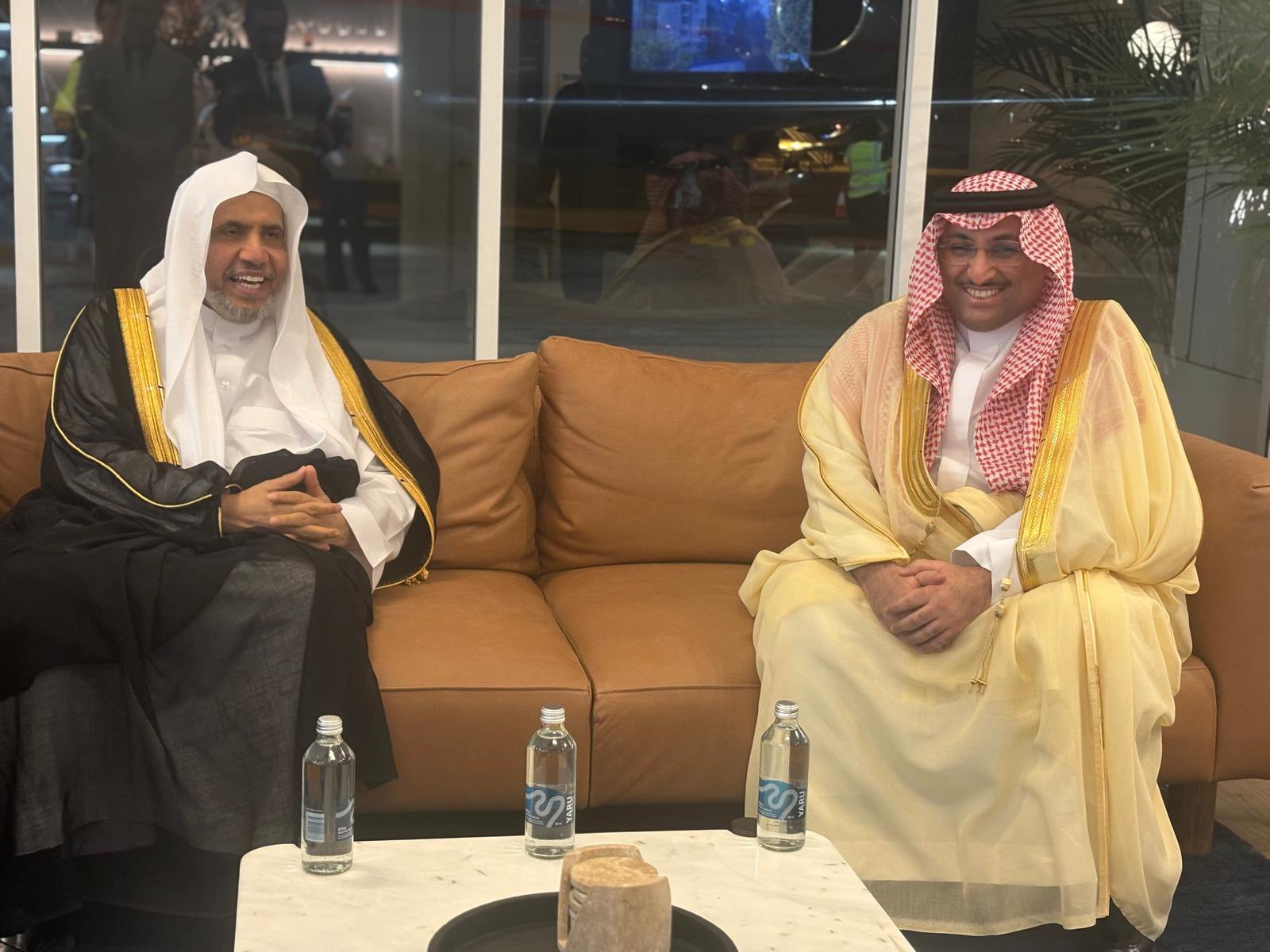
The Ambassador of the Custodian of the Two Holy Mosques to the Commonwealth of Australia, H.E. Sultan Fahad Bin Khuzaim, received H.E. the Secretary-General of the Muslim World League, Chairman of the Council of Muslim Scholars, Sheikh Dr. Mohammad Abdulkarim Al-Issa, who is undertaking an official visit to Australia.
استقبل سعادة سفير خادم الحرمين الشريفين لدى كومنولث استراليا الأستاذ/ سلطان بن فهد بن خزيم، معالي الأمين العام لرابطة العالم الإسلامي، رئيس هيئة علماء المسلمين فضيلة الشيخ الدكتور/ محمد بن عبدالكريم العيسى، خلال زيارة معاليه الرسمية إلى أستراليا.
Recent Posts
- Saudi surgeons successfully separate Fijian conjoined twins
- Al-Issa’s visit highlights Australia’s multifaith future
- Saudi Ambassador to Australia Receives Muslim World League Secretary-General
- Australian Saudi Business Council and Forum hosts Ramadan iftar in Sydney
- Saudi Heritage Shines at Canberra’s National Multicultural Festival 2026
Recent Comments
Archives
- October 2026
- April 2026
- March 2026
- February 2026
- September 2025
- August 2025
- May 2025
- February 2025
- September 2024
- June 2024
- May 2024
- February 2024
- November 2023
- October 2023
- September 2023
- April 2023
- March 2023
- February 2023
- December 2022
- November 2022
- October 2022
- September 2022
- July 2022
- September 2021
- July 2020
- February 2020
- January 2020
- September 2019
- February 2019
- January 2019
- March 2018
- February 2018
- January 2018
- December 2017
- November 2017
- October 2017
- September 2017
- August 2017
- December 2016
- November 2016
- October 2016
- September 2016
- August 2016
- June 2016
- May 2016
- February 2016
- January 2016
- December 2015
- October 2015
- July 2015
- May 2015
- April 2015
- November 2014
- October 2014
- August 2014
- July 2014
- April 2014
- March 2014
- February 2014
- December 2013
- November 2013
- October 2013
- September 2013
- August 2013
- July 2013
- June 2013
- May 2013
- April 2013
- February 2013
- December 2012
- October 2012
- September 2012
- August 2012
- July 2012
Categories
- 2009
- 2010
- 2011
- 2012
- 2013
- 2014
- 2015
- 2016
- April
- April
- April
- Arabic
- August
- Combatting Terrorism
- December
- December
- December
- December
- December
- December
- English
- February
- February
- February
- February
- January
- July
- July
- June
- June
- June
- June
- March
- March
- May
- May
- May
- May
- November
- November
- October
- October
- Photo Gallery
- SA News
- SA TV
- Saudi Australia Relations
- SAUDI BULLETIN
- Saudi Issues
- Saudi Vision 2030
- September
- September
- September
- September
- September
- September
- Uncategorized